


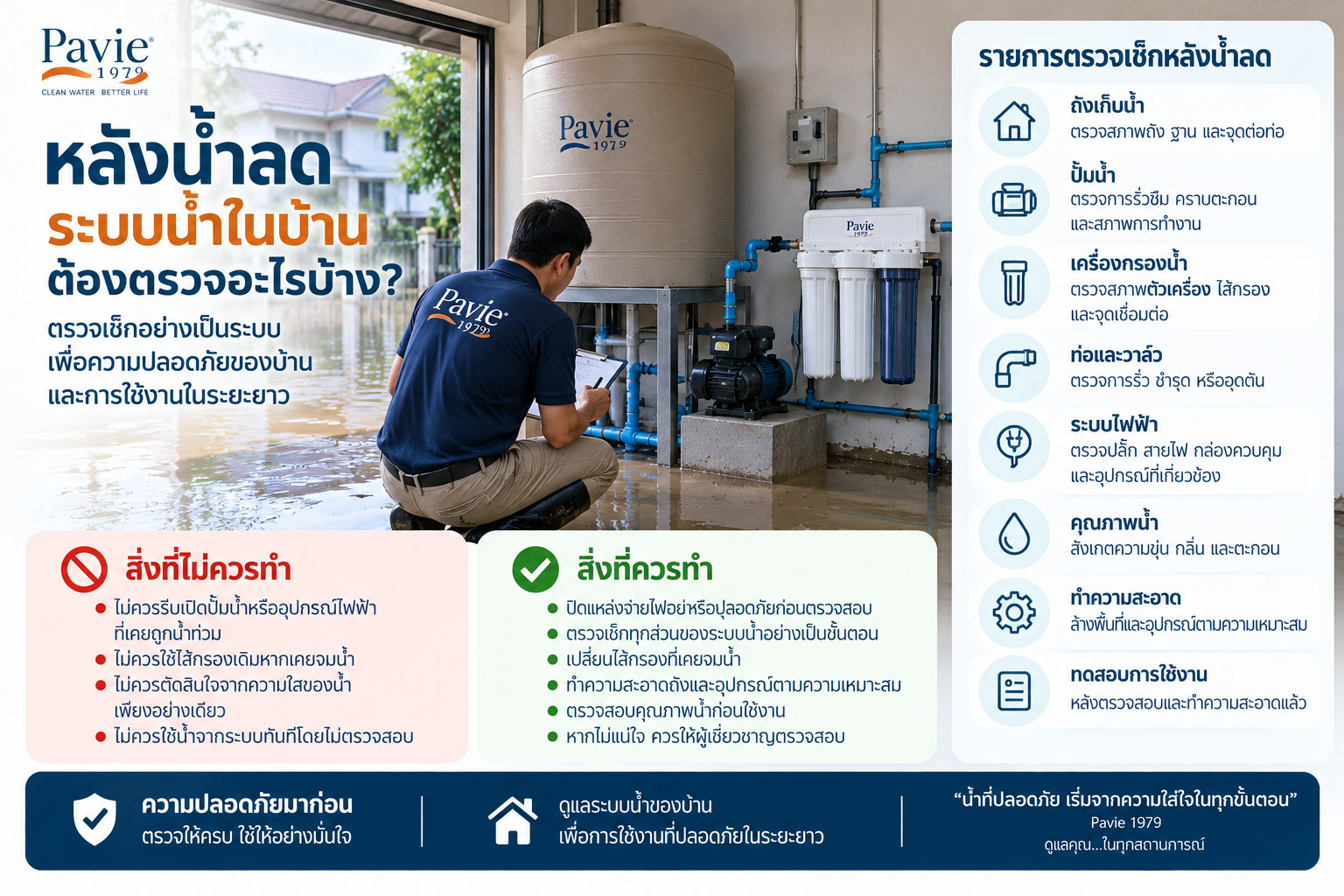
Start with electrical safety. Equipment that was submerged should not simply be switched back on. Safely isolate power and arrange appropriate inspection.
Check storage tanks for secure lids, cracks, loose connections and evidence that external water entered the tank. Clear-looking stored water is not proof of drinking-water safety.
Inspect the pump and its base for submersion, movement, cracking or instability. Check connected plumbing and fittings as well.
If filtration equipment was flooded, inspect housings, tanks, valves, seals, cartridges or media, pumps and electrical components before reuse, especially for drinking-water systems.
Inspect pipes, valves and fittings for leaks, movement, impact damage and incorrect valve positions.
After the system has been appropriately checked and returned to service, observe color, odor, cloudiness, sediment and pressure. Investigate abnormalities before using the water for drinking or food preparation.
Check notices from the local water provider. Private wells and groundwater systems reached by floodwater require particular caution.
Photograph the highest flood level and affected equipment. This record can help with repairs and future decisions about elevating or relocating equipment.
Post-flood checklist
- Do not energize submerged electrical equipment before inspection.
- Inspect the storage tank and lid.
- Inspect the pump and base.
- Inspect filtration equipment and media.
- Inspect outlets, controls and wiring.
- Inspect pipes, valves and leaks.
- Check water-quality notices.
- Observe color, odor, sediment and cloudiness.
- Record the highest flood level for future planning.
Use the event to improve future resilience
Damage observed after a flood can reveal weaknesses in the previous installation. Use real flood-level information and observed failures when planning future changes.