


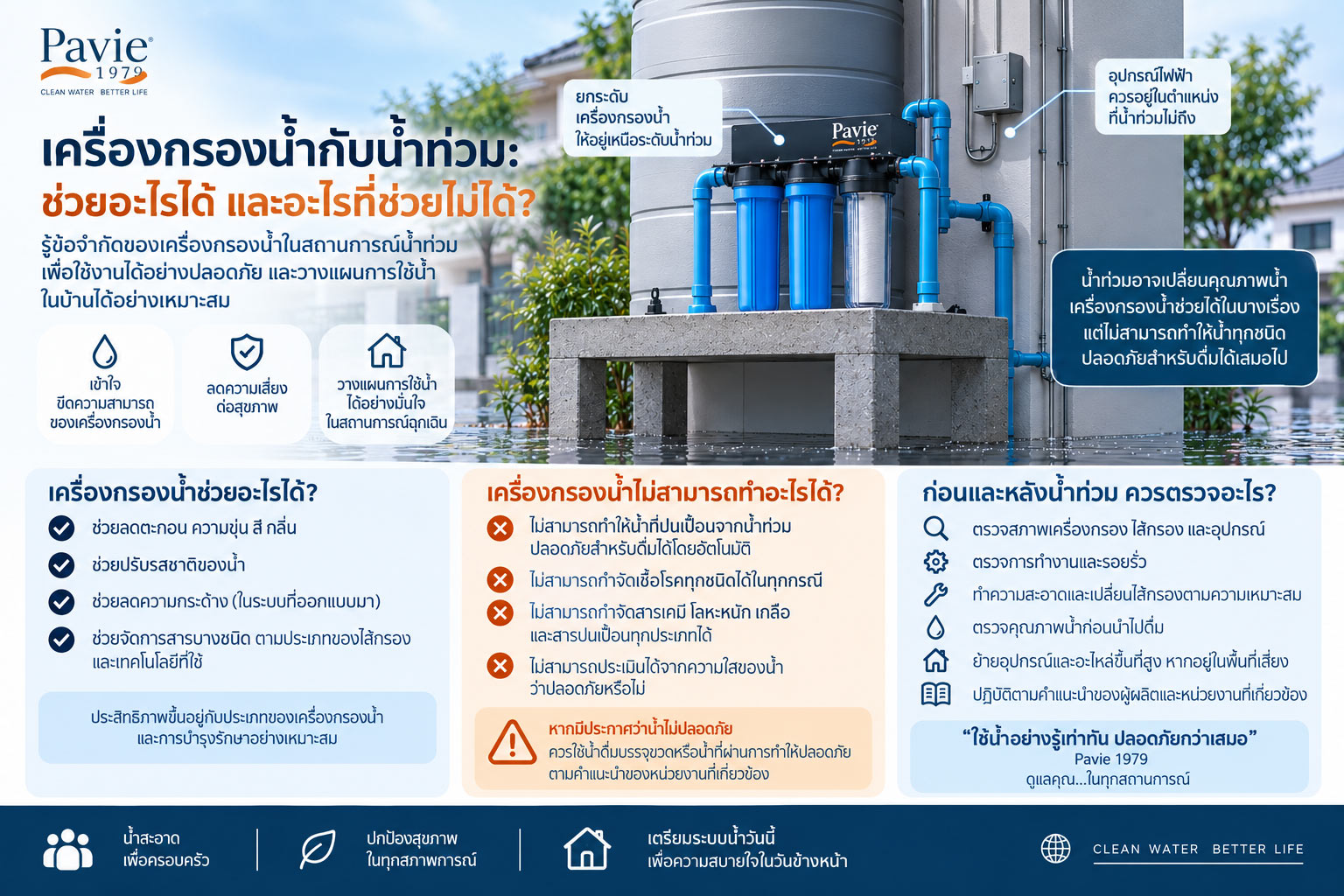
Different systems perform different jobs. Sediment filtration, carbon media, conditioning and membrane processes each have purposes and limits. A system that handles particles may not address another contaminant.
Clear-looking water is not proof that it is safe to drink. If flooding may have affected the source or distribution system, do not rely on appearance, odor or clarity alone.
Sediment filters can capture particles within their design range, but clearer water does not mean every contaminant has been removed. Other treatment technologies likewise have specific capabilities.
Boiling according to public-health guidance can reduce risks from many pathogens, but does not remove chemicals, heavy metals, salts or certain other contaminants.
If floodwater reached filter housings, tanks, valves, pumps, electrical components or connections, assess the system before reuse. Drinking-water systems deserve particular caution.
Private wells and groundwater systems require extra care after flood exposure. An existing filter is not proof that the water remains safe.
If drinking-water safety cannot be confirmed, use a source identified as safe by relevant authorities, such as properly sealed packaged water or an officially recommended emergency treatment method.
Good filtration begins with understanding what needs to be filtered
Treatment should match actual water conditions and the system should be maintained appropriately. If drinking-water safety is uncertain, follow official guidance.