


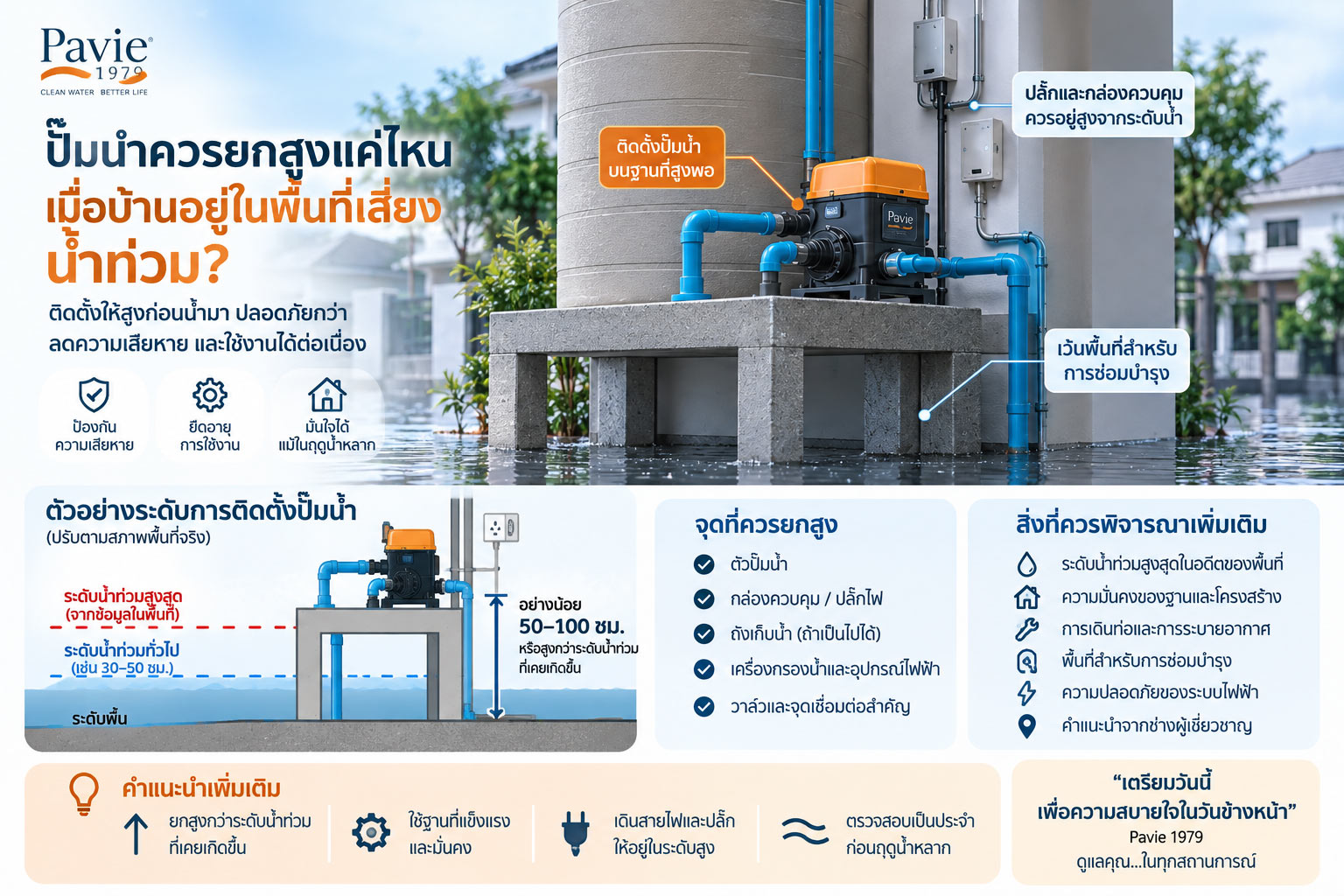
Water pumps are commonly installed at ground level beside a home because the location is convenient for plumbing and maintenance. In a flood-prone area, however, that convenient location can quickly become vulnerable.
The important point is that there is no single installation height that is appropriate for every home. Pump elevation should be considered in relation to the site’s flood history and risk, property conditions, plumbing, electrical systems and equipment requirements.
Why is a ground-level water pump vulnerable?
A typical water pump includes a motor, controls and electrical components. If floodwater reaches these parts, equipment can be damaged and moisture, sediment or corrosion may remain inside.
The assessment should include more than the pump itself.
Related equipment may include:
- electrical outlets;
- switches;
- control boxes;
- wiring;
- dedicated breakers or controls;
- electrical connections; and
- electrically powered water-treatment equipment.
Raising only the pump while leaving its electrical controls at a lower flood-vulnerable level may leave the overall system at risk.
How high should the pump be raised?
Avoid applying one fixed number of centimetres to every property.
A more useful starting point is to determine how high floodwater has reached at the actual installation area and assess that information together with current site conditions.
Consider:
- previous flood levels at the property;
- surrounding ground levels;
- locations where water tends to enter or accumulate;
- the possibility of a future event exceeding previous levels;
- the height and structural stability of the proposed base;
- existing plumbing configuration;
- electrical equipment locations; and
- installation requirements for the particular pump.
Historical flood levels should therefore be treated as design information, not a guarantee that future flooding cannot exceed them.
The pump base must be stable, not merely high
The purpose of an elevated pump base is not simply to increase distance from the ground.
It must safely support the pump and related equipment and remain appropriate for operational vibration.
Consider:
- structural strength;
- appropriate pump anchoring;
- ventilation;
- drainage around the base;
- inspection access; and
- sufficient space to remove or replace the pump.
Placing a pump on an unstable or temporary structure simply to gain height can create new hazards instead of reducing risk.
Do not forget the electrical equipment
A pumping system consists of more than the pump.
If the pump is elevated but its outlet, controls or electrical connections remain within potential flood reach, the system may still be vulnerable.
When relocating a pump, have the associated electrical installation assessed as part of the same work.
Electrical systems should not be relocated or modified by someone without appropriate electrical knowledge.
Raising the pump also affects the plumbing
Moving a pump upward changes the position and potentially the length or routing of connected pipes.
Both suction and discharge plumbing should be assessed, along with valves, fittings and pipe supports.
The pump itself should not be subjected to inappropriate loads or stresses from poorly supported pipework.
Installation requirements also vary by pump type, particularly on the suction side, so the requirements of the actual equipment should be considered.
Leave enough room for maintenance
A very high base or an installation squeezed into a tight location may protect the pump from water while making inspection, repair or replacement unnecessarily difficult.
Allow sufficient access to:
- inspect the pump;
- remove the pump;
- inspect valves;
- inspect fittings;
- inspect electrical components;
- clean the surrounding area; and
- replace equipment in the future.
A good installation balances flood protection with practical maintenance.
If the pump has been flooded, do not immediately test it
After floodwater recedes, it can be tempting to switch the pump on immediately to see whether it still works.
If the pump, motor, outlet, control box, wiring or related electrical components were submerged, do not immediately re-energize the system.
Even when the outside appears dry, moisture, sediment or corrosion may remain internally.
Safely isolate the electrical supply and have affected equipment appropriately inspected before returning it to service.
New construction and renovations should consider flood risk from the beginning
Where a property has a history of flooding, planning the water system during design is usually easier than relocating equipment after construction.
Consider the locations of:
- water storage tanks;
- pumps;
- filtration equipment;
- electrical systems;
- control boxes;
- valves;
- pipes;
- drainage; and
- maintenance access.
Considering these components as one connected system can reduce the need for piecemeal corrections later.
Checklist: Inspect your home’s pump installation
Check:
- Is the pump installed directly at ground level?
- Has the area flooded or experienced standing water before?
- Where was the highest previous flood level?
- Is the electrical outlet lower than the pump?
- Is the control box within a potential flood level?
- Is the pump base structurally stable?
- Is there adequate maintenance access?
- Is the pipework properly supported?
- Can electrical power to the system be safely isolated?
If several answers are uncertain, a site-specific assessment is preferable before modifying the installation.
It is not simply about raising the pump
Flood protection for a household pump involves more than building a taller platform.
Flood levels, structural support, plumbing, electrical systems, stability and maintenance access should all be considered together.
For flood-prone homes, preparing the system before flooding occurs is generally easier than repairing a flooded pump and electrical system afterward.
For a broader household checklist, see our guide to preparing your home water system for flooding