


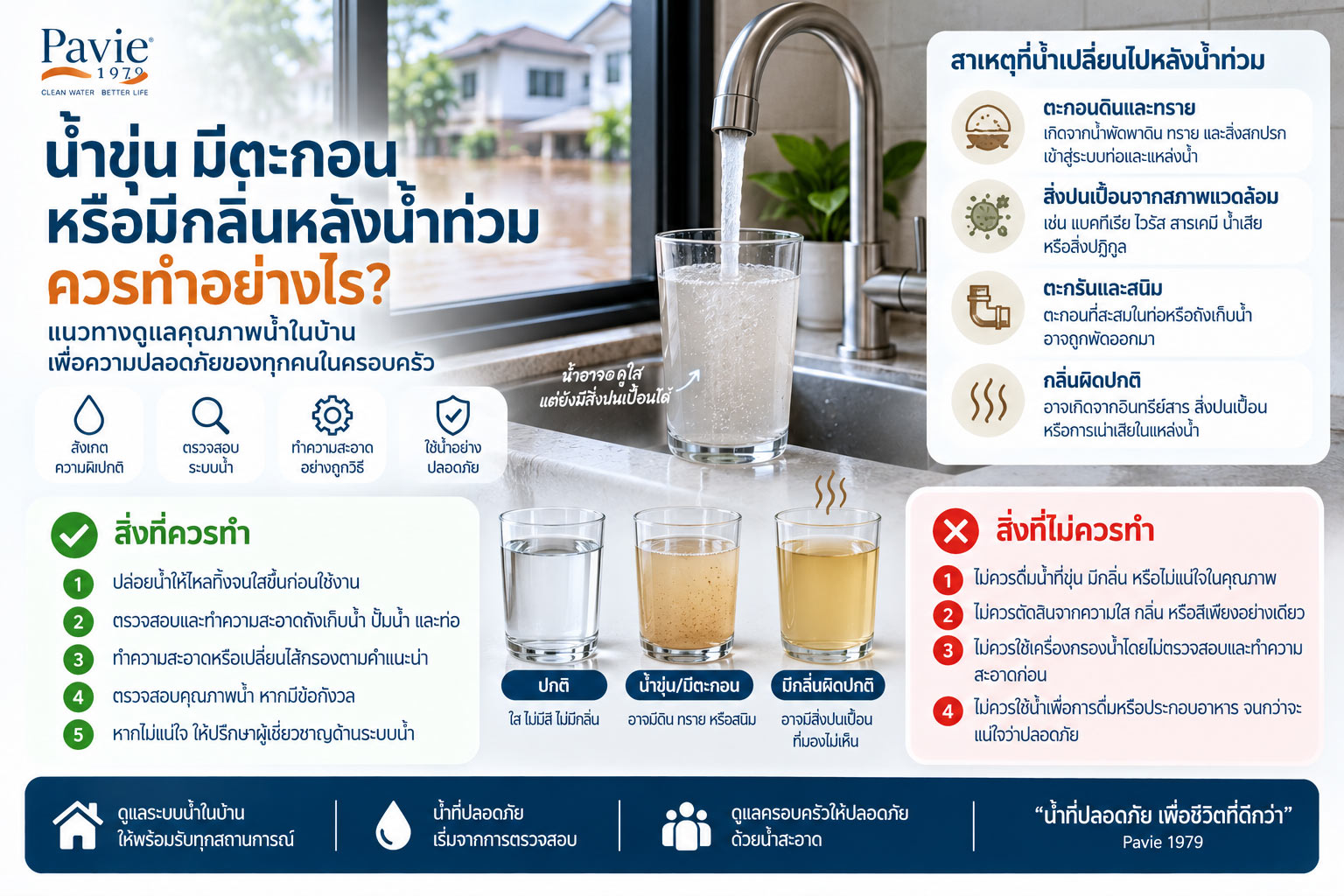
Do not assume clear-looking water is safe to drink. Check notices from the water provider and relevant authorities.
If water is cloudy, determine whether the issue affects every tap or only certain outlets, whether it occurs with cold or hot water, and when it began.
If sediment has increased, remember that it can clog filters quickly and reduce pressure. Replacing a cartridge without finding the source may address only the symptom. Check the source, storage tank, plumbing and upstream system as appropriate.
For unusual odors, note whether the smell occurs at every tap, only with hot water, or before/after filtration. Do not taste water to test its safety.
Inspect storage tanks for secure lids, cracks, loose connections and signs of external water entry.
If pressure has changed, inspect the filtration system, valves, pump and plumbing rather than assuming one component is responsible.
Boiling according to public-health guidance can address many pathogens but does not remove chemicals, heavy metals, salts or certain other contaminants.
If authorities say water is unsafe, if abnormalities appear after flooding, or if the source of the problem cannot be confirmed, avoid using the water for drinking or food preparation until adequate information is available.
Checklist for abnormal water after flooding
- Check water-provider notices.
- Determine whether all taps are affected.
- Inspect the storage tank.
- Inspect filters and treatment equipment.
- Inspect pump, valves and pressure.
- Do not taste water to test safety.
- Do not assume clear water equals safe water.
- If drinking-water safety is uncertain, use a confirmed safe source.
Solve the cause, not only the symptom
Color, odor, cloudiness and sediment are useful observations, but an appropriate solution may require looking at the source, tank, plumbing, pump and filtration system together.