


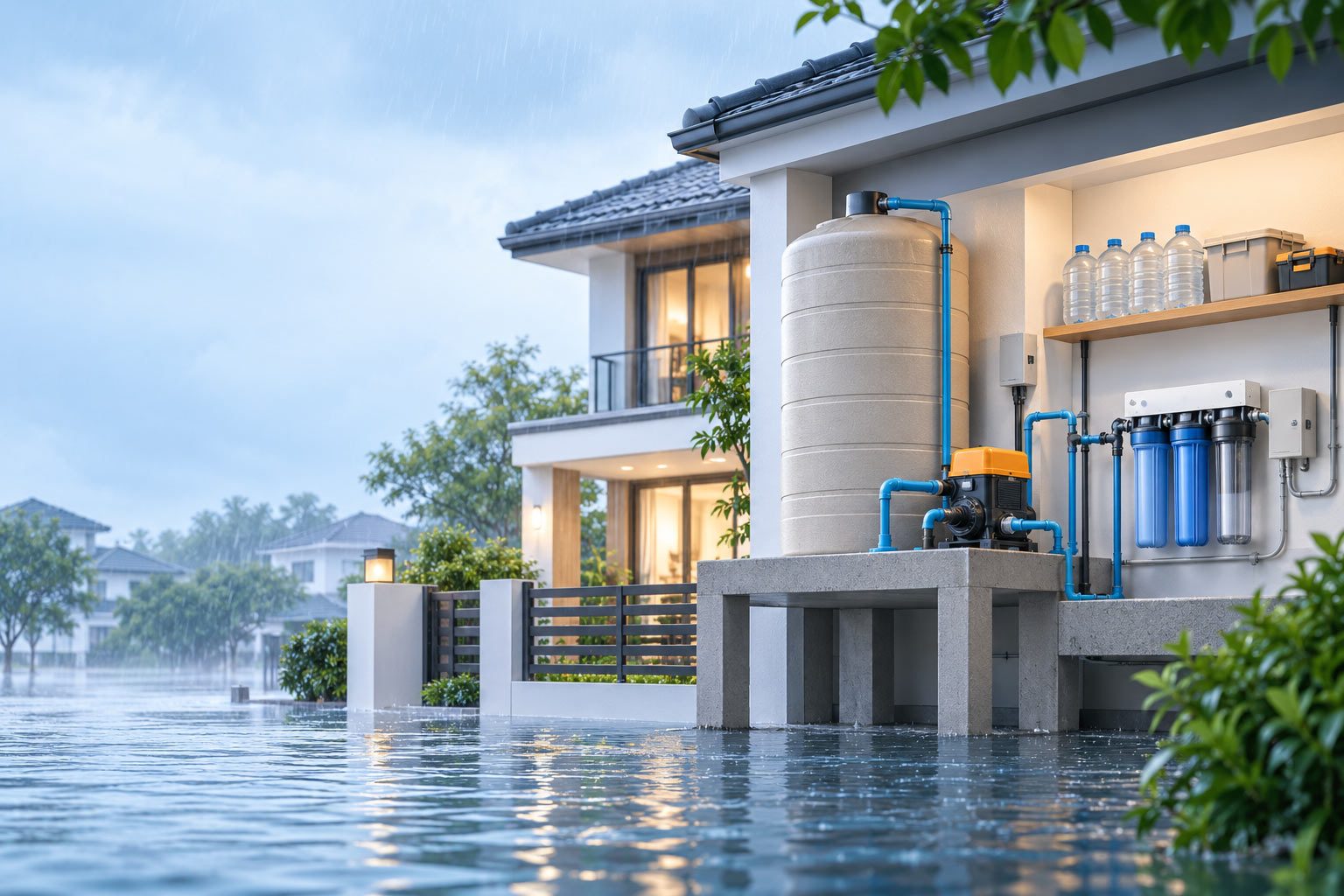
When heavy rain or flooding threatens, people often think first about moving vehicles, raising belongings and keeping water out of the house. Another essential system, however, deserves attention: your home’s water system.
Even when tap water is still available, flooding can affect water production and distribution facilities, electrical systems, pipelines and water pressure. Some areas may experience low pressure, temporary service interruptions or concerns about water quality.
Preparing in advance can make emergencies easier to manage and reduce potential damage to water tanks, pumps, filtration equipment and associated electrical components.
Start with a supply of safe water
When heavy rain, flooding or possible water service disruptions are expected, prepare water before problems begin.
Emergency water should be separated into at least two categories.
Water for drinking and food preparation
Use water you know is safe and store it in clean, food-grade containers with secure lids.
Water for general household use
Water for bathing, cleaning and sanitation can be stored separately in larger containers where appropriate.
Keeping these supplies separate helps avoid using limited drinking water for tasks that do not require potable water.
A storage tank can help during water service disruptions
A home that receives municipal water into a storage tank before distributing it through the house may retain a temporary supply when external water pressure falls or service stops.
Having a tank alone, however, is not enough. Check whether:
- the tank has a secure lid;
- pipe connections could allow external water or contaminants to enter;
- the tank is located where floodwater could reach it; and
- the tank and plumbing are appropriately cleaned and maintained.
If your area has flooded before, considering tank location during installation can prevent significant problems later.
Water pumps should be kept above potential flood levels
Water pumps are often installed at ground level beside a house because this makes plumbing and maintenance convenient. In flood-prone locations, however, that position can become a vulnerability.
Floodwater can damage more than the pump motor. Electrical controls, wiring and connections can also be affected.
For homes in flood-risk areas, a qualified installer should assess whether the pump and related equipment should be installed on an elevated, stable base above the relevant flood-risk level. Structural stability, plumbing, ventilation and future maintenance access should all be considered.
If a pump or electrical equipment has been flooded, do not immediately switch it back on after the water recedes. Disconnect the power safely and have the equipment inspected by a qualified professional.
Water filters can help, but they do not automatically make every water source safe
Different filtration systems are designed for different problems, including sediment, odor, color, hardness, particular substances or certain microorganisms, depending on their technology and design.
Therefore, having a water filtration system does not mean that water suspected of flood contamination can simply be filtered and immediately consumed.
If authorities advise that water is unsafe, or contamination is suspected, follow guidance from the relevant authorities and use bottled water or water treated using an officially recommended emergency method.
Homes using private wells or groundwater systems require particular caution. If floodwater reaches the system, the water should be considered potentially unsafe until appropriately assessed.
How can a tank and pump help when water pressure drops?
When pressure in the external water supply falls, a properly designed storage-tank and pump system may allow a household to continue using water already stored in the tank.
How long that supply lasts depends on tank capacity, household size and water consumption.
During an emergency, postpone high-consumption activities such as washing cars or large outdoor areas whenever possible, preserving stored water for essential needs.
If water becomes cloudy, contains sediment or smells unusual, do not assume a filter will solve everything
A noticeable change in water is a reason to investigate before using it.
If the water has an unusual color, odor, sediment level or cloudiness, check notices from your local water provider and avoid drinking it until its safety is established.
A sediment filter may reduce sediment, but this does not mean it removes every possible contaminant.
Similarly, boiling can address many disease-causing microorganisms but does not remove chemicals, heavy metals, salts or some other contaminants.
What should you check before floodwater arrives?
If you have time to prepare:
- Store an adequate supply of safe drinking water.
- Fill your household water tank to an appropriate level.
- Make sure the tank lid is securely closed.
- Check the installation height of the water pump.
- Inspect electrical outlets, wiring and control boxes located near the floor.
- Move spare filters, parts, tools and electrical equipment to higher locations.
- Identify the main water valves and make sure you know how to shut them off.
- Photograph pipes, valves, pumps and filtration equipment before flooding for easier inspection afterward.
- If floodwater may reach electrical equipment, prepare to safely disconnect the system according to professional guidance.
After the flood, do not switch everything back on immediately
Before restarting pumps or filtration equipment located in flooded areas, determine whether the equipment, motor, electrical control box, plugs, wiring or other components were submerged.
Electrical equipment can appear dry externally while moisture, sediment or corrosion remains inside.
If a filtration system has been flooded, have its filter housings, tanks, valves, connections and filtration media appropriately inspected before returning it to service, especially if the system is used to produce drinking water.
If you are building or upgrading your home water system, consider flood risk from the beginning
For homes in areas with a history of flooding, designing the water system with flood resilience in mind is usually easier than relocating equipment later.
Factors worth considering include:
- the highest known or relevant flood level for the property;
- water tank location;
- pump base elevation;
- filtration equipment location;
- electrical equipment and controls;
- pipe and valve layout;
- access for inspection and maintenance; and
- appropriate emergency water storage for the household.
There is no single installation height suitable for every home. Flood risk, property conditions and water-system designs vary. A site-specific assessment is therefore more useful than relying on one universal measurement.
Preparing your water system before an emergency is easier than repairing flood damage afterward
Flooding cannot always be prevented, but its impact on a household water system can often be reduced.
Keeping safe water in reserve, using an appropriately designed storage tank, locating pumps and electrical equipment above relevant flood-risk levels, and choosing filtration based on actual water conditions can all improve household preparedness.
Most importantly, if water quality changes or an official safety notice is issued, do not use the appearance of the water or the presence of a filtration system as proof that the water is safe to drink.
Always check guidance from the relevant authorities. If your household water system has been flooded, inspect affected equipment before putting it back into service.
Read more about pump placement: how high a water pump should be installed in a flood-prone area