



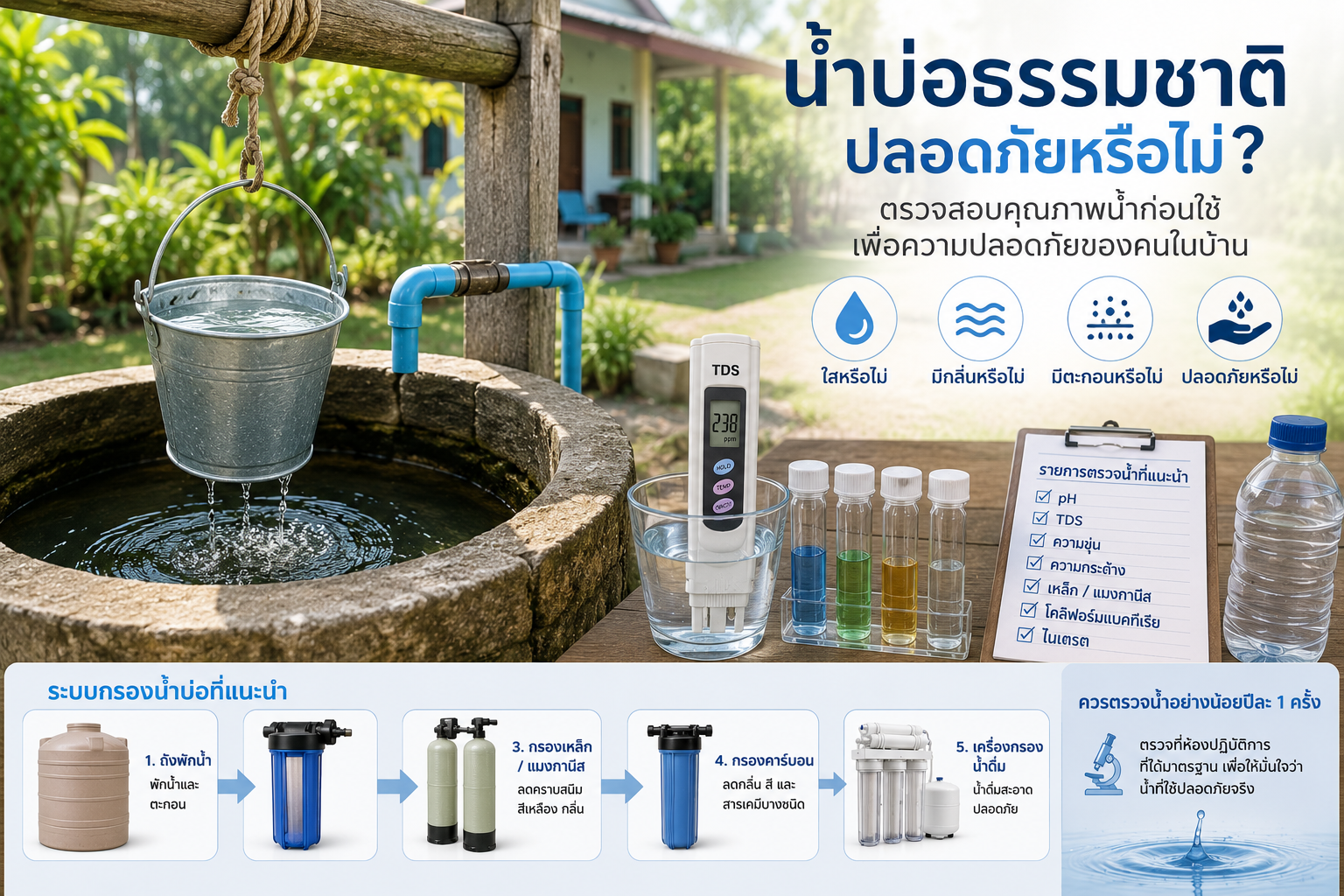
Many homes in rural or semi-rural areas do not rely entirely on municipal tap water. Instead, they may use natural well water, groundwater, ring wells, or local water sources because these options are convenient, cost-effective, and available throughout the year.
However, an important question is: “Is natural well water safe?” The answer cannot be determined by appearance alone. Water that looks clear, has no odor, and contains no visible sediment may still contain bacteria, minerals, or contaminants that cannot be seen with the naked eye.
Can Natural Well Water Be Used?
Natural well water can be used, but it is important to separate its purpose clearly: household use or drinking water. These two uses require different levels of water quality and safety.
Household Water
Household water is used for bathing, laundry, floor cleaning, car washing, gardening, and general daily use. If the water has no strong odor, no heavy sediment, and does not cause staining or skin irritation, it may be usable after proper filtration or treatment.
Drinking Water
Drinking water requires much stricter control because it is consumed directly. Natural well water should not be consumed without proper testing and treatment, even if it looks clear and tastes normal.
Possible Risks in Natural Well Water
- Bacteria or pathogens from sewage or animal waste
- Earthy, muddy, metallic, or rotten egg odors
- Sediment, sand, soil, or organic particles
- Iron, manganese, or rust-related staining
- Hardness and scale buildup
- High TDS causing salty, bitter, or unpleasant taste
- Nitrate contamination from fertilizer, septic tanks, or farming areas
- Chemical contamination from surrounding land use
Homes located near animal farms, agricultural areas, septic tanks, wastewater systems, or flood-prone areas should be especially careful about possible contamination.
Is Appearance, Smell, and Taste Enough?
No. Appearance, smell, and taste are only basic observations. Some water may look perfectly clear but still contain bacteria or dissolved contaminants.
Homeowners can observe the following signs:
- Yellow, red, brown, or black discoloration
- Sediment settling at the bottom of containers
- Rotten egg, metallic, muddy, or chemical odor
- White scale, yellow stains, or rust stains on fixtures
- Itchy, dry, or irritated skin after use
- Frequent clogging or staining in appliances, pumps, or plumbing
What Should Be Tested?
If natural well water is used as a household water source, basic testing should include the following:
| Test item | What it indicates | Important for |
|---|---|---|
| pH | Acidity or alkalinity of water | Pipes, pumps, filters, and skin comfort |
| TDS | Total dissolved solids in water | Taste, scaling, and general water quality |
| Turbidity | Suspended particles and cloudiness | Filters, tanks, and appliances |
| Hardness | Minerals that cause scale buildup | Fixtures, water heaters, coffee machines, and appliances |
| Iron / Manganese | Causes yellow, rusty, or black stains | Sanitary fixtures, laundry, and plumbing |
| Total coliform / E. coli | Possible contamination from waste | Drinking water, cooking water, and health |
| Nitrate | Possible contamination from fertilizer, wastewater, or farming | Drinking water, especially for homes with young children |
How Often Should Well Water Be Tested?
If well water is the main water source, it should be tested at least once a year. Additional testing is recommended after flooding, unusually heavy rain, well repairs, pump replacement, or any noticeable change in color, odor, or taste.
If the water is used for drinking or cooking, microbial and chemical testing should be taken seriously, and proper drinking water filtration or disinfection should be used.
What Filtration System Is Suitable for Natural Well Water?
The right system depends on the test results and actual water problems. In general, a well water treatment system may include:
- A storage tank to allow sediment settling and provide backup water
- Sediment filtration to remove sand, soil, and suspended particles
- Iron or manganese removal media if rusty or black stains are present
- Carbon filtration to reduce odor and improve water quality
- Hardness reduction if scale buildup is a problem
- A point-of-use drinking water system such as RO, UF, or UV depending on water quality
If Well Water Looks Clear, Can It Be Drunk Directly?
No. Clear water does not always mean safe water. Bacteria, nitrate, and dissolved contaminants cannot always be seen, smelled, or tasted. If well water is intended for drinking, it should be tested by a reliable laboratory or authority and treated with an appropriate drinking water system.
Conclusion
Natural well water can be used, but its quality should be tested first, especially if it will be used for drinking or cooking. Clear appearance alone does not guarantee safety, as water may contain bacteria, high minerals, rust, hardness, or invisible contaminants.
For household water, a proper system may include a storage tank, sediment filtration, and treatment based on actual water problems. For drinking water, more detailed testing and a dedicated drinking water filter are recommended.
Pavie 1979 provides consultation for natural well water, groundwater, household water filtration, and drinking water systems for homes, cafés, and small businesses in Plaeng Yao, Bang Khla, Chachoengsao, and nearby areas. You can send water photos, test results, or well details for preliminary system assessment.