

After floodwater recedes, the first step is not fragrance or pouring disinfectant everywhere. Make the area safe, physically remove water, mud and debris, clean surfaces, and only then use sanitising or disinfecting products as directed on their labels when appropriate.
Floodwater may contain sewage, germs, chemicals and debris. Avoid direct skin contact, particularly if you have open wounds.
A practical recovery order
Protect yourself → remove water and mud → rinse/scrub → clean → disinfect as label-directed when appropriate → dry → recover washable fabrics → address pet areas
Basic items such as a floor squeegee, buckets, microfiber cloths, heavy-duty rubbish bags, sponges, small brushes, eye protection and task-appropriate masks can usually be bought locally.
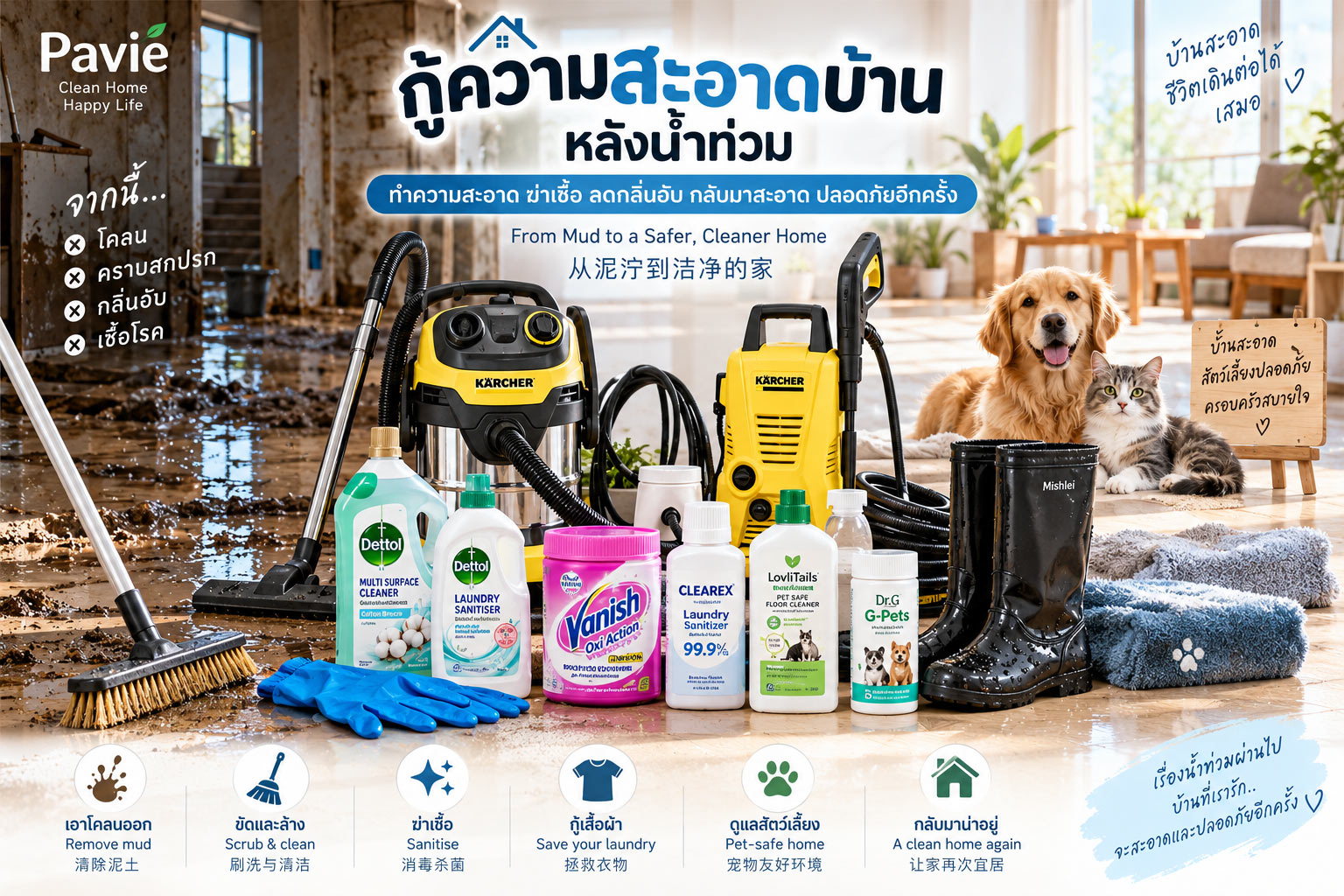
1. KARCHER WD 5 S V-25/5/22 Wet & Dry Vacuum 1100W
Useful while floors still contain residual water and wet debris, especially corners that are difficult to squeegee. Follow the appliance manual and use only after electrical safety has been established.
2. KARCHER K2.360 High-Pressure Washer 120 bar
Can speed removal of soil and mud from hard surfaces suitable for pressure washing. Do not spray electrical components, outlets, damaged walls, fragile materials, wood or surfaces not rated for pressure washing.
3. Sun Brand Brass-Bristle Floor Scrub Brush
For stubborn residue on hard surfaces that tolerate aggressive scrubbing. Test a small area first because brass bristles can scratch glazed tile, natural stone, wood, polished metal and other finishes.
4. Dettol Hygiene Multi-Use Cotton Breeze 750 ml x2
Use only for purposes and surfaces stated on the actual product label. Check dilution, rinsing and contact-time directions. A disinfecting claim is not a reason to skip physical removal of mud and dirt, and the product should not be mixed with other cleaners unless explicitly directed.
Laundry and washable fabrics
Separate flood-affected fabrics from normal laundry, remove mud first and follow garment care labels. Items that cannot be adequately cleaned and dried may not be worth retaining.
5. Dettol Laundry Sanitiser 750 ml
An option for the laundry sanitising stage. Follow label dosage and method rather than increasing concentration on your own.
6. Vanish Oxi Action Powder Antibacterial 420 g
Useful for stain treatment on compatible washable fabrics. Check directions for whites/colours, prohibited materials and soaking/washing method.
7. CLEAREX Laundry Sanitizer 500 ml
An alternative laundry sanitiser. Choose Dettol or CLEAREX according to price, availability and washing method; there is no reason to combine both.
Hand and foot protection
8. Excia CT011 Nitrile Chemical-Protection Gloves
Helps reduce direct skin contact with dirty water, mud and cleaning products. Verify chemical compatibility for the actual products being used. Replace damaged gloves or gloves contaminated on the inside.
9. Mishilei PVC Waterproof Shoe Cover
Suitable for lighter wet work. Areas containing glass, nails, sharp debris, deep water or unstable footing require more protective footwear than a foldable shoe cover.
Homes with pets
Pet-safe does not automatically mean lick-safe or safe for animals to walk over while wet. Follow label instructions for dilution, rinsing, ventilation and drying before pets re-enter the area.
10. LovliTails Pet-Household Floor Cleaner 550 ml
The listing markets odor control and pet-safety benefits. This article does not independently validate "Food Grade 100%", "30 seconds" or pet-safe claims as toxicological facts without supporting manufacturer documentation. Follow the label and keep pets away until the area is ready.
11. DrG G-Pets 50 g Pet Odor Microbial Product
Best positioned as an odor-management product after physical cleaning. It should not replace removal of contamination or any necessary sanitation step. Microbial, safety and performance claims should follow the product label/manufacturer information.
What may not be worth saving?
Porous materials exposed to contaminated floodwater that cannot be cleaned and dried quickly may need to be discarded, including some mattresses, carpets and pads, foam-filled items, paper, books and certain wall materials. Photograph items before disposal when safe if documentation may be needed for insurance.
Drying is part of cleanup
Once electrical use is safe, ventilation, fans and dehumidifiers can help remove remaining moisture. Track relative humidity rather than assuming that a dry-looking surface means the structure is fully dry.
Dehumidifiers and air purifiers after a flood - choosing by room size and humidity
FAQ
Can I pour disinfectant directly over mud? Do not use it as a shortcut. Remove dirt and clean first, then use a suitable product according to its label.
Can I mix cleaners to make them stronger? No. Mixing cleaners can create hazardous chemicals or vapors.
Can a pressure washer be used everywhere indoors? No. Pressure can damage materials and force water into electrical systems and joints.
Can every moldy item be cleaned and saved? No. Porous materials that cannot be adequately cleaned and dried may need disposal.
Does pet-safe mean pets can walk on a wet treated floor? Do not assume so. Follow the label and wait until the area is ready.